
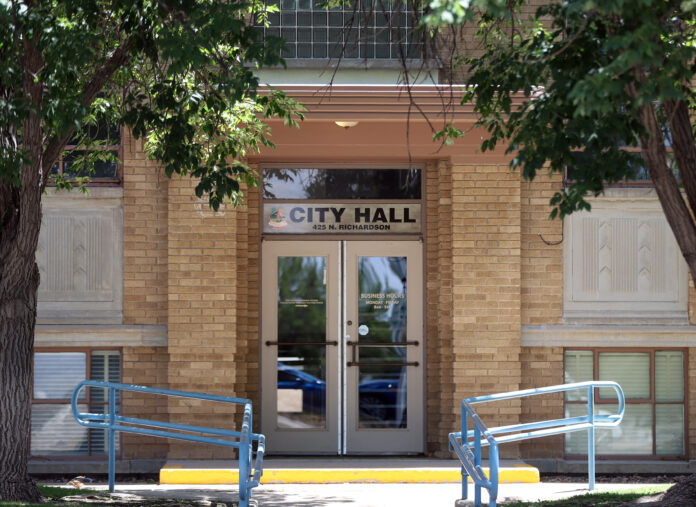
Roswell voters will not see a proposed tax hike on their ballots this November.
Procedural and technical errors on the part of city officials kept the proposed 10-year, 0.25% local option Gross Receipts Tax (GRT) from being taken up by voters in the Nov. 3 election, the city said in an Aug. 25 Facebook post.
The Facebook post stated that because the city made an error in the process for adopting the necessary ordinance for the proposal, the new tax would not be put before voters. The deadline to get items on the ballot for the November election was Aug. 25.
“Since this type of tax implementation requires a public vote, this proposal is not moving forward at this time,” the post stated.
Roswell City Manager Hess Yntema told the Roswell Tribune Thursday that City Clerk Amelia Martinez found the error when reviewing the footage from the Aug. 17 public hearing. At that meeting, Yntema said councilors accidentally voted to pass a motion to re-advertise the meeting instead of approving an ordinance for the 0.25% tax. The ordinance would have included the exact language of the local option GRT proposal.
The rush to make the Aug. 25 deadline to get the measure on the ballot, combined with insufficient proofreading of the agenda, contributed to the error, Yntema said.
Yntema said the question could be placed on the ballot in the next municipal election in November 2027. The city could also hold a special election to take up the issue, he said, but such a move would cost the city between $40,000 and $50,000,
The tax would have raised the city’s overall GRT to 8.52%, with the revenue portion from the new tax going into an economic development fund that would be managed by the city. Based on 2026 GRT revenue collections, the local option tax would have brought in $4.5 million annually. The tax would have expired in 2037 without renewal via a majority of city voters.
New Mexico’s Local Economic Development Act (LEDA) requires local governments to get voter approval to levy and collect revenue on a local option GRT of up to 0.25%.
State law specifies that local governments must then put that revenue into a fund dedicated to economic development. Money from the fund can be used for public works improvements needed to draw businesses, as well as grants, loans, technical assistance, and upgrading infrastructure on properties where businesses plan to relocate.
Proponents of the new tax, such as Mike Espiritu, president and CEO of the Roswell-Chaves County Economic Development Corporation, told councilors in July that 50 municipalities in New Mexico have imposed such taxes.
LEDA also allows counties to impose a 0.125% local option GRT. Chaves County Commissioners moved 3-2 to send such an increase to county voters in the upcoming election. County Manager Bill Williams confirmed the county’s proposed increase will be on the ballot. Revenue from that tax would bring in about $2 million annually.