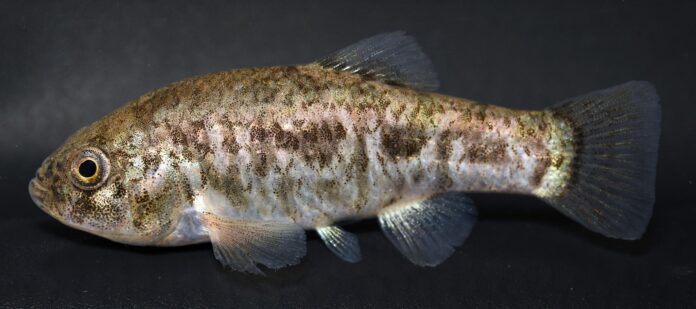
A Pecos River fish native to the waters of southeast New Mexico and West Texas is at the center of a federal lawsuit.
The Pecos pupfish was proposed as a “threatened” species in November 2024 by the U.S. Fish and Wildlife Service, but no action was taken over the following 12 months as required under the Endangered Species Act, according to the lawsuit.
The suit, filed Sept. 8 in U.S. District Court for the District of New Mexico by Santa Fe-based environmental group WildEarth Guardians, called on the federal government to act and list the species as threatened, offering federal protections to prevent its extinction.
WildEarth Guardians first petitioned the federal government to list the fish in 2007.
The Endangered Species Act provides for two categories of protection – endangered and threatened. Endangered status means the agency believes extinction to be imminent, restricting some development in areas known as habitat and requiring lands be set aside for recovery.
Threatened status indicates an endangered listing would soon be warranted, entailing some lighter restrictions on lands believed populated by the species.
Aridification of the region led to dwindling flows in the Pecos River where the pupfish dwells, read the suit, along with expanding oil and gas development and increased industrial water use in the area.
Along with its 2024 proposal to list the Pecos pupfish as threatened, the Fish and Wildlife Service also proposed restrictions to 136 river miles along the Pecos River and 26,000 acres in southeast New Mexico and West Texas.
The lawsuit called on the court to demand the agency fully analyze these proposals and issue a decision.
“The science has already been done, the threats are already known, and the Service has already concluded that the Pecos pupfish needs the protections of the (Endangered Species Act),” said Jennifer Schwartz, an attorney with WildEarth Guardians. “Congress imposed deadlines for a reason: species can disappear while bureaucrats delay.”
The listing faced opposition from local leaders in agriculture and the oil and gas industry.
The Carlsbad Irrigation District, which provides water to about 500 members, mostly farmers and ranchers along the Pecos River in southern Eddy County, voiced opposition to the 2024 proposal in public comments submitted by letter in January 2025.
The district operates and stores water in irrigation reservoirs along the Pecos River at Santa Rosa Lake and Lake Sumner to the north and at Lake Avalon and Brantley Lake.
Setting aside critical habitat on the Pecos could risk water supplies to the reservoirs and the district’s ability to manage the river, read the letter signed by District Manager Coley Burgess.
Burgess contended district members and users of the Pecos River were already taking steps to protect the river and native species such as the pupfish, and that a threatened listing would unduly restrict access to local groundwater supplies.
“CID is also concerned that the proposed rule did not adequately consider the economic impact of designating a critical habitat for the Pecos pupfish on the Pecos River in New Mexico,” the letter read. “If CID is unable to deliver water to meet the needs of its farmers, those farmers will suffer a negative economic impact as a result of crop loss due to lack of water.”
Several conservation agreements along the river were already in place outside of federal regulations, meaning further restrictions were not warranted, argued the American Petroleum Institute in its letter opposing the listing.
The institute, a national oil and gas trade group, submitted its comments on behalf of the New Mexico Oil and Gas Association, the Texas Oil and Gas Association and the Permian Basin Petroleum Association.
The associations specifically pointed to the Carlsbad-based Center for Excellence, a nonprofit that facilitates federally approved conservation plans with local landowners to prevent further species loss.
The center already has in place agreements designed to protect the imperiled dunes sagebrush lizard, lesser prairie chicken and Texas hornshell mussel – agreements that benefit the local ecosystem and would be needlessly impeded by listing the pupfish, read the letter.
Under the agreements known as candidate conservation agreements with assurances, or CCAAs, a landowner agrees to take certain measures to prevent harm to the species in exchange for facing no further restrictions should a listing occur.
“In light of these efforts, it is clear that a federal listing of the species in the Pecos River is unnecessary and would impose burdensome regulations without additional conservation benefits,” read the letter from the oil and gas groups. “There are numerous comprehensive and well-planned initiatives already in place to support the survival of pupfish populations and their regional habitats.”
But the Permian Basin region, known as one of the nation’s busiest oil and gas fields, was expected to continue to grow its fossil fuel extraction operations, meaning stronger regulations were needed to prevent extinction, argued Joanna Zhang, endangered species advocate with WildEarth Guardians.
“Fossil fuel extraction and industrial water usage threaten both the Pecos pupfish and the human communities who rely on a healthy Pecos River,” she said. “Securing a final listing for this native desert species establishes a vital shield against the impacts of extractive industry in the Permian Basin.”
Managing Editor Adrian Hedden can be reached at 575-628-5516, or @AdrianHedden on the social media platform X.