
Part 1: The origin
“Old school” teachers have encouraged the reading of the biographies of successful individuals so as to appreciate the complete struggle of people of impact. These citizens relay stories of inspiration and enable the cultural critical thinking so desperately needed during times of instant, real time gratification. The focus during National Hispanic Heritage Month is to renew our appreciation for Hispanics who have not only created an integration of the American culture, but have enabled the spirit of Americanism.
In 1968, President Lyndon Johnson declared the week of Sept. 15 as one to celebrate the independence of five Latin American countries which successfully ended Spanish rule on Sept. 15, 1851. Costa Rica, El Salvador, Guatemala, Honduras, and Nicaragua may have gained independence but the goal of freedom is, to this day, a sought after achievement.
The term “Hispanic” was coined by the U.S. Census Bureau in preparation for the 1980 census as to “… both define a community but still recognize their American identity” and the term itself referred to “… peoples in the Americas and Spain who speak Spanish or are descended from Spanish speaking communities.” As such, the term Hispanic refers to cultures and is categorically different from the vague term “race” which refers primarily to physical and genetic characteristics.
By 1988 President Ronald Reagan declared the 30-day period from Sept. 15 to Oct. 15 as National Hispanic Heritage Month “… to provide more time for the nation to properly acknowledge and celebrate the diverse and significant contributions of Hispanic Americans to American society.”
Previously, Americans with Hispanic heritage from seven non-Central American countries were referenced with Mexico providing the greatest percentage of “significant contributions.” Today, from the original five Central American countries that promulgated this remembrance, the following five individuals have offered lasting contributions to American culture but are merely synopses of extraordinary biographies.
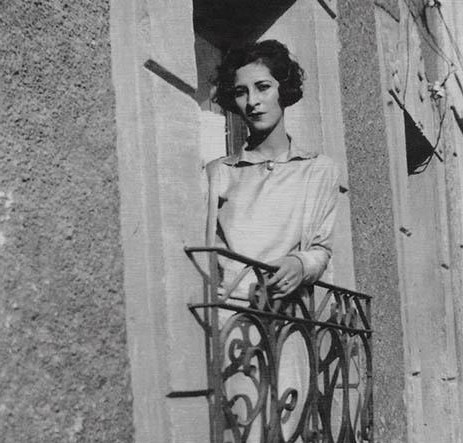
Born in Guatemala, Blanca Rosa Rodriguez Lopez (or Blanca Rosa Lopez Rodrigues: 1906-1992) was a child of wealth and aggressive independent thinking. Due to their wealth, the family was privileged to travel and soon after her birth she experienced an American early education in Oakland, California. As a teen, Lopez returned to Guatemala to become a Catholic nun but revolted against the doctrine and sought a secular education. Guatemalan law prohibited her higher education quest and she entered her first activist role by creating a group to lobby for females in higher education.
By 1928, Lopez had moved to New York City and supported her unemployed husband and child while working as a seamstress in the garment district where she endured the less-than-human working conditions experienced by all workers at the lower socioeconomic level of society. In 1930 Lopez changed her name to Luisa Moreno to protect her family from her now-controversial activist life.
The American Federation of Labor (AFL) hired Moreno in 1935 as a professional labor organizer and in 1936 she was sent to Florida to unionize its tobacco workers. Due to a conflict concerning the rights of Hispanic workers, she left the AFL and joined the new Congress of Industrial Organizations (CIO) and was elected to the Chief Executive Officer position as the first woman and first Latina to head the organization. For the next decade Moreno became a major, controversial influence for workers’ rights and Hispanic civil rights but withdrew from American public life and returned to Guatemala in 1950, where she continued her campaign to enable indigenous women the right to higher education.
Moreno continued her political wanderlust by going to Mexico, then Cuba, before finally returning to her homeland, where she died in 1992. Her significant contribution to the American culture as a labor activist and Hispanic civil rights proponent is often overlooked, and historians are currently uncovering forgotten elements of her political impact on American working conditions. She was also a journalist and a poet and her life may be explored in various literary publications. Her life may have been complex, but her goal was simple: fair and equal treatment for all.
Next time, four more significant Hispanic contributors of Central American heritage.