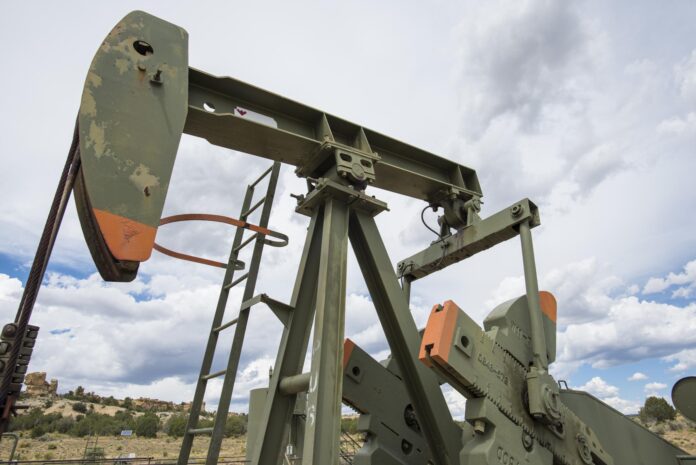
Oil wells can leak pollution into the land and air when abandoned, and state agencies often must pick up the bill for cleanup.
In New Mexico, the work is conducted by the Oil Conservation Division, an arm of the state’s Energy, Minerals and Natural Resources Department.
The division reported it plugged 114 abandoned wells in Fiscal Year 2026, running from July 1, 2025, to June 30 of this year, via a July 9 report published by the agency.
That leaves 586 wells on state and private lands identified as abandoned in a July 2025 report by New Mexico’s Legislative Finance Committee – wells the Oil Conservation Division has the authority to plug without consent from the operator.
The division could soon seek approval to plug 1,400 other inactive wells, according to the committee report, which also identified 3,000 wells producing “extremely small quantities of oil and gas” that could soon require plugging.
Operators in New Mexico can receive approval from the division to keep wells idle, meaning they are not producing during an agreed-upon time frame.
When a well’s owner fails to communicate with the state about such a status, the well can be deemed abandoned or “orphaned.” In state terms, that means no active owner is identified – often when an operator finds the well to be no longer financially viable.
Once a well is declared orphaned, the state can plug and clean up the facility, potentially remediating the land back to its normal state.
Plugging is the first step toward cleaning up an unused well, with concrete and other materials poured into the borehole to prevent remaining gas or liquids from leaking out.
The FY 2026 plugged-well total surpassed the division’s previous record of 104 plugged wells set in FY 2024. The wells were plugged at an average cost of about $236,000 per well.
That means the wells plugged in FY 2026 wells cost roughly $26.9 million, not accounting for the costs of remediating the land, which the state estimated can amount to millions of dollars depending on the state of the land and age of the well.
The committee estimated the state could face a liability up to $1.6 billion for plugging all 60,000 of New Mexico’s currently active wells when they are no longer in use.
But Erin Taylor, acting cabinet secretary of the natural resources department, was optimistic that the state’s work so far prevented pollution in New Mexico’s atmosphere and water supplies.
“This milestone reflects New Mexico’s ongoing commitment to protecting public health and safety by reducing greenhouse gas emissions and safeguarding groundwater,” Taylor said of the work done in FY 2026.
Since then, the state said, it plugged 429 wells, estimating the work cut methane emissions from the wells by 59,000 grams per hour since FY 2023, or 517,000 kilograms per year.
The work was funded using a combination of federal grants and tax funds provided by oil companies through the state’s Oil Reclamation Fund.
That included about $109 million from the U.S. Department of Interior through a provision in the Infrastructure Investment and Jobs Act.
The legislation was signed into law by former-President Joe Biden in November 2021, providing about $1.2 billion for well-plugging in 24 states, including New Mexico.
And New Mexico lawmakers passed House Bill 80, which was signed into law by Gov. Michelle Lujan Grisham on March 9, to increase the amount going into the fund and restrict it from other uses. The bill was estimated to bring up to $108.7 million to the fund by FY 2030.
Looking ahead, the Oil Conservation Division said it was still eligible for $57 million in federal funds to plug wells and remediate land. The agency reported it already had spent $14.7 million to reclaim 505,950 square feet of land at former well sites.
“Every well we plug is a direct investment in New Mexico’s future,” said Division Director Albert Chang in a statement. “This year’s results show what’s possible when we combine technical expertise, effective planning and a commitment to serving the people of our state.”
Missi Currier, president of trade group the New Mexico Oil and Gas Association, said operators were largely compliant in cleaning up inactive wells.
“Our members fully support operators meeting, and often exceeding, their obligations to responsibly plug and remediate wells,” she said. “We remain committed to working with regulators on policies that protect the environment while preserving New Mexico’s ability to attract investment and sustain the revenues that fund our schools, health care, and public services, making our state an energy mecca for generations to come.”
But Antoinette Reyes at the Rio Grande Chapter of the Sierra Club, a national environmental nonprofit, said public tax dollars should not be used to address the impacts of private industry.
“New Mexicans should not be left paying to clean up oil and gas pollution after companies move on,” Reyes said. “Oil and gas operators should be responsible for cleaning up their mess after they privately profit from extracting public resources.”
Managing Editor Adrian Hedden can be reached at 575-628-5516, or @AdrianHedden on the social media platform X.