“Great story, better if true.”
It’s a throwaway line journalists sometimes say to each other, a playful evocation of another era.
For those of us old enough to remember, editors would utter this adage, often with a hint of sarcasm, when a reporter pitched a story that sounded too good to be true.
After additional reporting, the reporter might learn that too good to be true meant the tip they received was false or, at the least, lacked important information that muddied a situation that appeared clear. Or the hunch they swore by was merely them interpreting events or information in a way that supported their own beliefs without being aware they were doing it.
We all have blind spots.
“Great story, better if true” was an effective tool in differentiating between knowing and believing and, sometimes, if you were lucky, revealing a blind spot you weren’t aware of.
The lesson journalistic elders bequeathed to generations of aspiring scribes was that believing that something is true is not the same as being able to document that it is true.
In journalism, if you are reporting a story, knowing something is true requires verification and documentation. Believing, on the other hand, is a matter of opinion unless it is backed up by facts.
This is not to say that belief and believing are lesser forms of human knowledge. They are not. (In fact, research shows that the line between objective knowledge and subjective feelings is a lot fuzzier than many of us would like to admit. Nobel laureate Daniel Kahneman’s book Thinking, Fast and Slow comes to mind as I write this.). Journalism’s best practices, particularly in investigative reporting, demand that a reporter document and verify, contrary to a person writing an opinion column.
Back in the “Great story, better if true” era, the world moved slower; public information spread at the speed of telephone calls, the printing of the next day’s newspaper and daily TV and radio broadcasts. You had time to sit and ponder what you heard on the TV news broadcast or read in the newspaper.
And in a newspaper newsroom, particularly the type of newsroom that was committed to the “craft” of journalism, rumors, gossip and half-baked ideas often died an excruciating death, done in by editors demanding that you support with facts what you purported to be true. I know. I was the recipient of many demands for supporting evidence over the years.
These days we live in a different world, a world where facts have merged with neighborhood gossip, rumors and half-baked ideas, all of which spreads at the speed of 24-hour up-to-the-second posts, videos, memes-by-algorithms — with much of it mistaken as “true” by many Americans.
These days everybody is a publisher. And many people have seized the opportunity to give the world their hot takes, sometimes on events or situations that are complex and require specialized knowledge accrued over years, sometimes decades.
Here’s my hot take: A lot of Americans could benefit from a gruff, profane editor standing over them and muttering in their ear “Great story, better if true.”
But as Americans fiercely guard their right to say anything they want, whether it’s true or not, I admit an army of curmudgeonly, short-tempered editors demanding proof is a pipe dream.
Honestly, I don’t know how to combat the information overload we’re currently living through. Today’s world is baffling; the amount of misinformation and disinformation that passes as legitimate information is overwhelming.
This troubles me as I think about the younger generation now entering journalism. I wish I had a magic wand to take all of us all back to that earlier era, when there was a scarcity of information, not an overabundance. Of course, that was an imperfect world, too. Not everyone was heard, or had access to tools that enabled them to get their stories out.
Like so much of human experience, there are downsides and upsides to what we’re living through.
So, there is no ageless wisdom I can impart to the younger generation of journalists beyond perhaps something said by Lou Reed, the street poet / co-founder of the influential rock band, the Velvet Underground.
And what was it the street poet said?
“Don’t believe the half of what you see and none of what you hear.”
Sounds strikingly similar to “Great story, better if true,” doesn’t it?
Sensible advice is sensible advice, whatever era you’re living through.
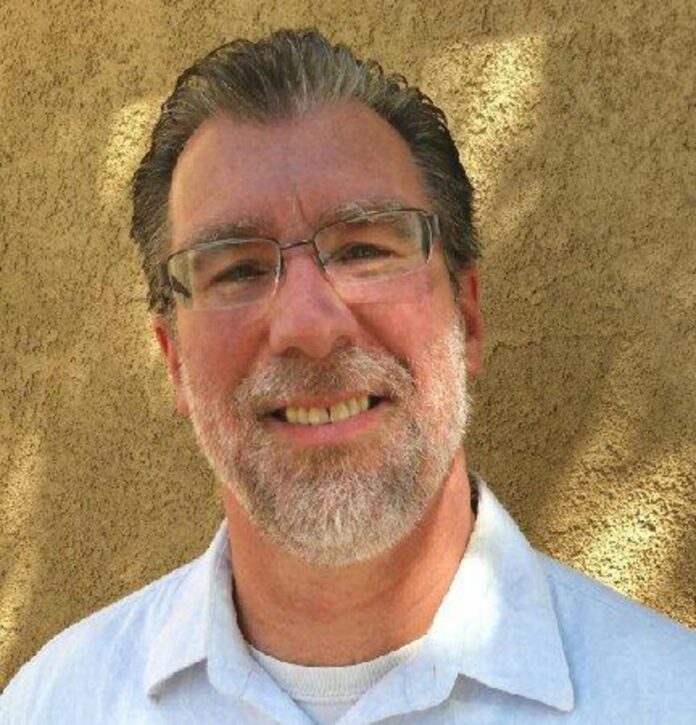
Since 2005, Trip has covered politics and state government for the Albuquerque Journal, The New Mexico Independent and the Santa Fe New Mexican. In 2012, he co-founded New Mexico In Depth, a nonpartisan, nonprofit media outlet that produces investigative, data-rich stories with an eye on solutions that can be a catalyst for change.