
Taxpayers in Chaves County could face an increased bill as the county commission voted to put a tax hike on the November ballot
The commissioners passed a resolution 3-2 at their regular monthly meeting Thursday Aug. 20 directing the county clerk’s office to put a proposal for a new five-year, one-eighth of 1% local-option gross receipts tax on the ballot for county voters in the Nov. 3 General Election, including those residing within Roswell. An ordinance allowing the tax to be levied if the proposal wins voter approval also passed the commission by the same margin.
New Mexico’s Local Economic Development Act (LEDA) allows municipalities and counties to impose such a tax with approval of their voters. Municipalities can request a local-option GRT of up to 0.25% and counties a local-option GRT of one-eighth of 1%.
All funds from the tax would go into an economic development fund, controlled by the county and used for expenses related to site readiness and public works improvements to properties where companies are looking to locate. Other fund uses under LEDA include grants, loans, public assistance and providing facilities.
The proposed tax would bring the county’s current 6.27% GRT rate to 6.39%.
Chaves County Manager Bill Williams told the Roswell Tribune that based on fiscal year 2026 county revenues, the proposed local-option GRT is projected to bring an additional $2 million into the county each year, an additional 12.5 cents for every $100 the county already generates in local GRT.
A GRT is similar to a traditional sales tax and is levied on nearly all business transactions in New Mexico and is paid as a percentage of the business’s revenue. The added expense is often passed on to customers, according to the New Mexico Taxation and Revenue Department.
The commission vote came after the Roswell City Council voted 7-1 Monday, Aug. 17, to place a similar 0.25% local-option GRT on the ballot for city residents. The increase would bring the city’s GRT to 8.27%. Based on tax receipts from fiscal year 2026, the local-option tax would generate an additional $4.5 million annually.
Commissioners Dara Dana of District 1 and Herbert “Hub” Corn of District 3 voted against sending the county proposal to voters, while commissioners Cliff Waide of District 2, Richard Taylor of District 4 and Michael Perry of District 5 voted for both the resolution and the ordinance.
Commissioners afforded the public two opportunities to weigh in: a special meeting Wednesday, Aug. 19 and at the regular meeting ahead of the vote.
Advocates for the new tax argued that it will generate a reliable revenue stream, controlled by the city and county, meant to attract new business and industries to the area.
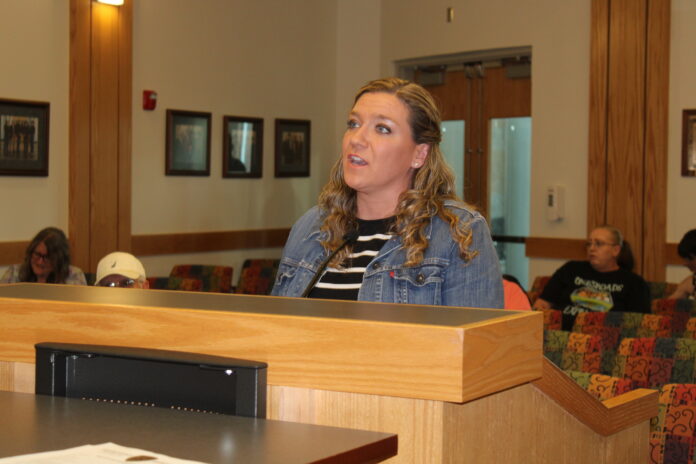
“This gives us an opportunity to take more control over our future instead of constantly going to Santa Fe, asking for money, applying for grants, waiting to see if someone else decides our projects are worthy of funding,” said Desiree Rattan, 42, of Roswell, a small business owner.
Mike Espiritu, president and CEO of the Roswell-Chaves County Economic Development Corporation, said that while there is never a good time to raise taxes, the proposal under consideration is a critical investment in the county’s future.
Opponents of the proposed tax worried it will further burden taxpayers, households and businesses at a time of rising costs.
“I’ve got people that are struggling to even come in to buy food, you know. They are barely making it on their own,” said Richard McCray, 55, owner of Crossroads Express, a cafe in Dexter.
Supporters of the proposal noted many items would remain exempt from the new tax, as they already are under New Mexico’s GRT, including groceries, fuel, agricultural products and employee wages. But Dana said the tax would be felt by consumers when purchasing other essential items such as diapers and cleaning supplies, as well as by business operations, such as restaurants.
Dana and other opponents acknowledge that economic development is badly needed, but at a time of rising costs, more taxes are the wrong way to achieve that.
“I just think it’s bad timing. Our economy right now is not doing very well,” Dana said.
Others argued that the fate of the proposal should be decided not by five county commissioners, but by county voters. Perry said Thursday that he would need to be swayed to back the proposal at the voting booth, but he wants to ensure his constituents have a say in the matter.