Adrian Hedden
Roswell Tribune
achedden@elritomedia.com
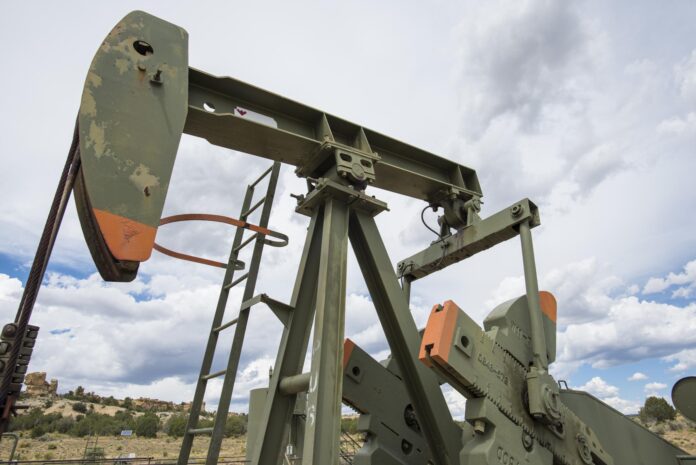
New Mexico lawmakers could revive a proposal to push oil and gas wells further away from communities across the state.
During a Monday, July 13, meeting of the Legislature’s interim Water and Natural Resources Committee at the New Mexico Military Institute, lawmakers both sides of the aisle debated the idea, which took the form of House Bill 35 during the 2025 legislative session.
Interim committees made up of lawmakers in both the House and Senate meet throughout the year and across the state to discuss issues and potentially devise legislation for the upcoming lawmaking session.
HB 35, sponsored by Democratic Reps. Debra Sarinana of Albuquerque and Joanne Ferrar of Las Cruces, died during last year’s 60-day session after it was approved by the House Energy and Natural Resources and Health and Human Services committees.
The bill would have mandated a one-mile buffer area between oil and gas facilities and occupied buildings such as homes and schools throughout the state.
The bill stalled when the full House failed to vote on it before the session ended March 22, 2025.
In New Mexico, legislative sessions alternate between 30 and 60 days in length. The shorter sessions focus on budgetary issues and are held in even-numbered years.
The next 60-day session starts in January 2027.
Sarinana said during Monday’s interim committee meeting that a similar bill would be brought forward during next year’s session.
“We will be fighting hard,” she said, to keep wells “at least a mile away from schools because these kids deserve better. They deserve to breathe clean air.”
Republican Rep. Mark Murphy of Roswell questioned if oilfields were truly to blame for air quality issues in rural southeast New Mexico.
“Different communities have different issues they need to deal with, but southeast New Mexico is no worse than Albuquerque, Santa Fe or the northwest,” he said. “I’m not saying we shouldn’t improve our air quality everywhere, but to focus on the oil patch, I think, is misguided.”
‘Something is escaping’
Mandy Sackett, lead New Mexico campaigner with national environmental nonprofit Earthworks, testified at the meeting in Roswell, advocating for legislation to impose a statewide setback blocking oil and gas facilities alongside homes and other occupied structures.
Sackett said Earthworks uses infrared cameras to track New Mexico oil and gas emissions that are “invisible to the naked eye.”
Many instances of such air pollution occur in areas near schools and neighborhoods, Sackett said.
She said the cameras do not specify which gasses are being emitted or in what quantity but suggested that if the plumes recorded were produced by steam or other non-polluting emissions they would “dissipate quickly.”
“It tells us conclusively that something is escaping into the air that shouldn’t be,” Sackett said.
Several of the emissions documented in New Mexico by Earthworks were occurring without violating current regulations, Sackett said, often within what she described as regulatory “gaps.”
“These rules as written are allowing too much pollution and it’s reaching the lungs of nearby students, patients and residents,” she said.
Specifically, Sackett pointed to Ocotillo Elementary School in Carlsbad, which she reported was about 450 yards downwind from a facility operated by Permian Resources, a Midland, Texas-based oil and gas company that operates several production facilities around the city.
Toxicologist doubts oil and gas setbacks
Toxicologist Debra Kaden, who spoke to lawmakers on behalf of industry trade group the New Mexico Oil and Gas Association, argued that pollutants in the air dissipate quickly after being emitted, some within 200 feet of the well site.
Kaden works for environmental consultant RHP Risk Management and said she has studied the health impacts of air pollution for the past four years.
She said she did not believe setbacks were needed “from a health perspective.”
“People don’t actually live at the fence line or sit on top of a stack to live,” Kagen said. “You need to understand what they’re actually exposed to. Evidence of exposure from 900 feet away does not mean those children were exposed to anything.”
Michelle Miano, director of the Environmental Protection Division at the New Mexico Environment Department, said that regardless of where oil and gas facilities are located, the state tracks a variety of emissions using a network of air monitors as far south as Carlsbad and as far north as Farmington.
The pollutants monitored include volatile organic compounds and chemicals that form ground-level ozone or “smog” when interacting with sunlight, Miano said. She said areas such as Carlsbad near oil and gas operations had higher levels of ozone than the state viewed as “healthy.”
Miano advocated for more funding from the state to expand its network of air monitors, potentially to include rural areas.
“Air knows no boundaries and occurs at a variety of elevations and is impacted by a variety of conditions, such as geography and meteorology,” Miano said.
Sackett argued that monitors were “no substitution” for setbacks and said more regulations were needed to prevent pollution.
“There is really strong scientific consensus that distance is the single most effective tool that we have to reduce exposure to oil and gas pollution near schools,” she said. “It is shameful that this issue continues to impact many of our educational facilities and young New Mexicans when this Legislature has the power to implement these common-sense regulatory tools.”