Emissions rise as feds look to loosen safeguards
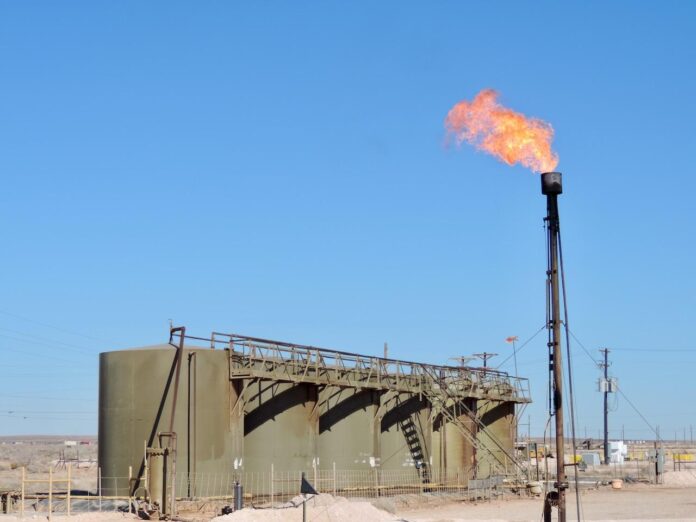
So-called methane “super emitter” events could be increasingly prevalent in southeast New Mexico’s oilfields.
National environmental nonprofit Earthworks reported it found 166 individual incidents throughout Eddy and Lea counties that would qualify as super emitters according to federal standards. The events occurred between January 2025 and April 2026.
The Earthworks report, released Oct. 21 in conjunction with New York-based nonprofit The Gas Leaks Project, was based on satellite data used to track the plumes along with reporting data filed by the operators. The results showed that only 2% of the super emitter events appeared to line up with operator reports of the emissions to the state of New Mexico.
Geoff Bromaghim with the Gas Leaks Project said the super emitter report created an argument for expanded use of satellite imagery in detecting large leaks of methane in the oil and gas industry.
“If operators and regulators simply weren’t aware of many of these emissions problems, using space-based monitoring data could find and fix harmful air pollution issues faster,” he said.
Methane is a known greenhouse gas, which many in the environmental community blame for decreased air quality in the U.S. Methane is also believed to be second only to carbon dioxide in its heat-trapping potential, leading to global warming.
It is a key component of natural gas extracted, often alongside crude oil, throughout the Permian Basin. Eddy and Lea counties make up New Mexico’s portion of the 55,000-square-mile basin, which the state shares with West Texas.
‘The methane problem’
The Environmental Protection Agency requires increased federal reporting and monitoring following a methane super emitter event, which the agency defines as any incident – typically a leak or some kind of equipment malfunction – totaling 100 kilograms or more per hour.
But that requirement could vanish if President Donald Trump follows through on comments he made about what he called “the methane problem” during a pre-midterm election rally in Lubbock, Texas.
Blaming strict controls on methane emissions from oil and gas operations for causing fuel prices to “skyrocket,” Trump said the EPA would rescind a slate of rules put into effect Dec. 2, 2023, under the administration of Democratic President Joe Biden. Among the targeted regulations: the federal super emitter program, which allows the EPA to identify certain well sites and facilities believed responsible for a large release of natural gas and add additional requirements tailored to specific incidents.
Other rules on the chopping block include a mandated two-year phaseout of routine flaring, or the burning of excess natural gas, and a one-year phase-in of low- or zero-emission pumps at oil and gas sites throughout the U.S.
Another major provision among the rules targeted for cancellation is one imposing the same requirements for existing oil and gas facilities as for new developments, meaning they must be retrofitted if equipment is noncompliant.
“Tonight, I’m officially terminating Biden’s expensive and unnecessary methane regulations,” Trump said during his Oct. 27 speech in Lubbock where he campaigned on behalf of U.S. Senate candidate Ken Paxton and other Texas Republicans. Paxton lost the race for Senate to Democrat James Talarico in the Nov. 3 Midterm Election.
EPA Administrator Lee Zeldin first voiced his desire to rescind the methane regulations on Oct. 7, arguing the rollback would save the industry $45 billion; in 2023, the EPA said enacting them would curb 58 million tons of methane emissions between 2024 and 2038.
Zeldin said in an Oct. 27 statement the proposal was a major step to “end the war on oil and gas,” and would result in more domestic energy production, thus lowering gas prices and other expenses for consumers.
“When owners and operators can produce, America benefits with lower prices. That is common sense, and it’s what we’re delivering with this proposal,” Zeldin said.
The rollback is supported by the industry.
Melissa Simpson, president of the trade group the Western Energy Alliance said canceling the rules would allow for oil companies to better collaborate with the federal government on regulations she said could protect the environment while allowing for more domestic fossil fuel production.
The Alliance represents about 200 oil and gas companies throughout the western U.S. including New Mexico, Colorado, Utah, Nevada, Wyoming, Idaho, Montana and the Dakotas.
“Western states have abundant oil and natural gas resources that can meet our nation’s energy needs,” Simpson said. “To do so affordably, federal regulations need to reflect variations on the ground in different regions without unnecessarily making it harder or more expensive to produce that energy.”
But Andrew Forkes-Gudmonson with Earthworks said tighter state and federal rules were needed. He said the group’s research on super emitters showed that current self-reporting requirements for operators were insufficient.
“Many have long suspected the oil and gas industry is overstating compliance with New Mexico’s gas capture requirements,” he said. “This report makes it clear: voluntary self-reporting requirements don’t cut it.”
The report came on the heels of regulations proposed July 16 by the New Mexico Environment Department intended to reduce methane emissions by establishing the state’s own super emitter program and defining such a facility as one emitting at least 50 kilograms per hour in a single event – half the federal threshold.
The proposal also includes language allowing the use of third-party data taken from satellite readings or other sources outside of state agencies in identifying such emissions.
“Methane leaks result in climate change, air pollution and waste of New Mexico’s natural resources,” said James Kenney, cabinet secretary at the New Mexico Environment Department.
“This regulatory proposal builds on New Mexico’s nationally-leading oil and gas rules and will result in oil and gas operators finding larger leaks faster, fixing them, and keep more natural gas where it belongs – in the pipeline.”
Such state-level rules could become more important in the coming years, Forkes-Gudmundson said.
“In the face of the Trump administration’s attack on climate rules, New Mexico has an incredible opportunity to put the state’s residents and climate before this polluting industry and adopt a super-emitter response program ASAP,” he said.
Managing Editor Adrian Hedden can be reached at 575-628-5516, or @AdrianHedden on the social media platform X.