Oil and gas companies could be forced to pay more to clean up abandoned wells.
The New Mexico State Land Office on Monday, Sept. 28, announced it was increasing required rates for the bonds oil companies must fund to guarantee cleanup in case wells are left abandoned.
The new rule, which was devised after months of public input and a two-day hearing on May 27 and 28, took effect Sept. 28. It comes as State Land Commissioner Stephanie Garcia Richard serves out her final months at the helm of the land office.
Garcia Richard is term-limited as New Mexico’s Commissioner of Public Lands but is running for lieutenant governor alongside Democratic gubernatorial candidate Deb Haaland in the Nov. 3 election.
The new rule championed by Garcia Richard about a month before the election raised the minimum bond for all of a company’s wells on New Mexico State Trust land to $150,000. The rule also allowed for the rate to be hiked further for operators with a history of noncompliance with state environmental rules, read a news release from the land office.
The previous minimum bond ranged from $10,000 to $25,000 depending on the specifics of a drilling site. The land office estimates it could cost up to $100,000 to plug a single abandoned well.
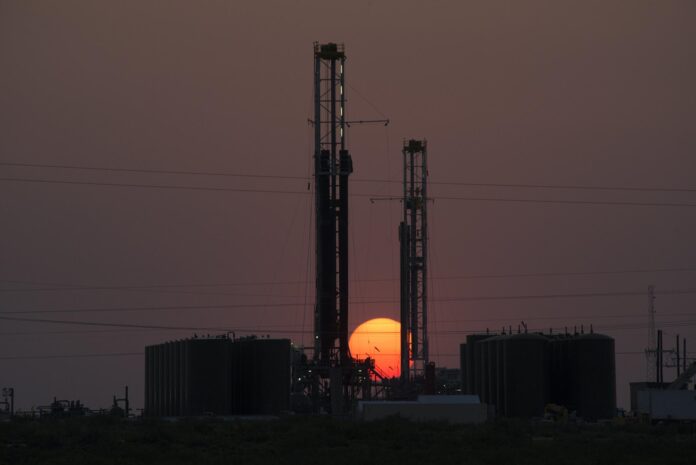
Oil and gas wells can become abandoned by operators when they are found to be financially nonviable and are ultimately designated “orphaned” by the state, which is then forced to plug the well and remediate the land.
There were an estimated 1,700 abandoned wells in New Mexico in need of plugging, according to the Oil Conservation Division.
And the expenses continue to rise.
The cost of plugging a well in New Mexico has increased by more than 750% since 2020, according to a Sept. 24 report from the Institute for Energy Economics and Financial Analysis, a U.S.-based nonprofit that provides energy industry analysis for the global market.
Meanwhile, the number of wells going inactive in New Mexico continued to climb, the report read. About 60 were added to the state’s inactive list per year between 2006 and 2015, the report read. The yearly increase was about 250 wells between 2016 and 2025.
“The steep rise in average plugging costs underscores the state’s failure to control these expenses in recent years,” read the report. “In other words, this hockey stick-shaped surge suggests that more than just normal market pressures are at play.”
To help offset such costs, operators are required when drilling a well to fund a bond, which acts as an insurance policy for the state to pay for remediation should the well be orphaned.
The land office estimated that for its 6,000 leases on State Trust land, many accommodating multiple wells, the office held about $15 million in bonds – an amount Garcia Richard said was “inadequate.”
“The bottom line is New Mexicans should never have to foot the bill to clean up messes on state lands,” Garcia Richard said. “This new rule puts much stronger financial assurances in place in the event there are unaddressed spills or a company goes belly-up and is unable to plug its wells.”
The higher rates announced by the state sparked opposition from oil and gas industry groups, which questioned the authority of the Land Office – as opposed to the New Mexico Legislature – to raise the rate.
Missi Currier, president of the New Mexico Oil and Gas Association, said the trade group was “evaluating its options” to potentially challenge the land office in court. The association represents about 200 oil and gas companies operating in the state.
“Oil and gas production is so critical to the state’s revenue and budget – providing nearly 50% of state revenues – that the Legislature decided not to leave any aspect of state oil and gas lease terms to chance or to the discretion of a single elected official, including the Commissioner of Public Lands,” Currier said in an emailed statement.
She argued that the authority to charge and enforce higher bonding rates was granted earlier this year to the Oil Conservation Division, a sub-agency within the New Mexico Energy, Minerals and Natural Resources Department, through a bill enacted by lawmakers and rule-making by the Division.
House Bill 80 increased the portion of New Mexico’s oil and gas conservation tax that goes to the state’s Oil and Gas Reclamation Fund used for well cleanup. The tax is paid by fossil fuel operators as a percentage of their proceeds.
HB 80 was signed into law by Gov. Michelle Lujan Grisham on March 9 after passing the New Mexico House and Senate unanimously during the 2026 legislative session, which ended Feb. 19.
On July 1, the Oil Conservation Commission, which functions as the Division’s governing body tasked with approving its policies, voted to increase that agency’s bonding requirements to $250,000 for all of a company’s wells and $150,000 per well for low-producing wells that could soon be orphaned.
The Division’s rate would apply to all oil and gas wells on state and federal land in New Mexico.
The higher rate enacted by the land office was “duplicative,” Currier said, and would unduly increase the cost of drilling in New Mexico.
“OCD has its own updated bonding rule, a dedicated reclamation fund supported by oil and gas taxes, and its own enforcement powers,” Currier said. “The practical result is double bonding from two agencies for the same work on the same land.”
But Garcia Richard maintained that she had the power to raise the rate for State Trust land, which her office manages and oversees.
“We will not be intimidated by threats from oil and gas corporations to challenge my statutory and constitutional authority to do my job on behalf of New Mexicans,” Garcia Richard said. “Raising financial assurances for oil and gas development is deeply rooted in New Mexico law. Moreover, it’s the right thing to do.”
Managing Editor Adrian Hedden can be reached at 575-628-5516, or @AdrianHedden on the social media platform X.