
Meeting on tax hike rescheduled from Thursday to Monday
At least one Roswell city councilor is vowing to fight a proposed tax increase that could go before voters in November, citing what she called the burden it would impose on taxpayers.
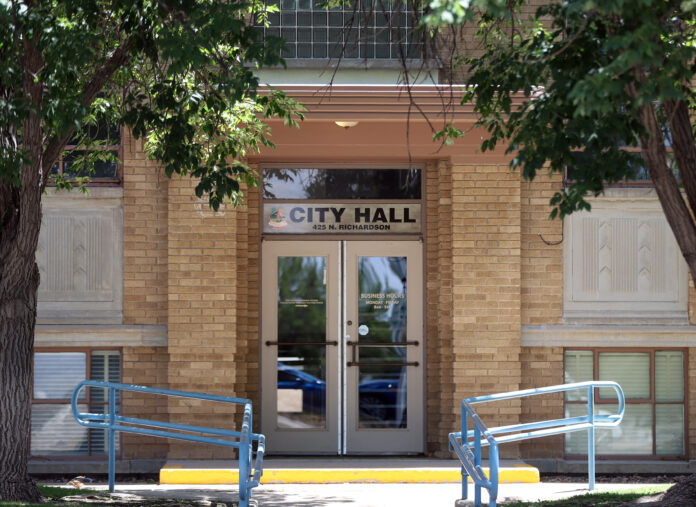
The full council is expected to hear public comment and then vote on a resolution Monday that would place a 0.25% local-option gross receipts tax for economic development on the ballot in the Nov. 3 General Election. The meeting will take place at Roswell City Hall, 425 N. Richardson Ave., following an Infrastructure Committee meeting scheduled for 2 p.m.
Councilors were initially supposed to take up the resolution at their regular meeting today at 6 p.m. at the Chaves County Administrative Center, but the vote was instead moved to Monday’s special hearing.
“It’s pretty simple. I don’t want to put this on the backs of my taxpayers,” Ward 1 City Councilor Christina Arnold told the Roswell Tribune Wednesday.
Arnold conceded that the resolution will likely get the majority of support needed to pass the council at Monday’s meeting, but that she will mount a “boots-on-the-ground” effort to convince the public to defeat it at the polls.
The city projects that the proposed local-option tax would bring in an additional $0.25 for every $100 the city already collects in local gross receipts taxes. Based on receipts from fiscal year 2026, the new tax would generate an additional $4.5 million annually.
The Roswell-Chaves County Economic Development Corporation is supportive of the proposal as CEO Mike Espiritu argued 50 other New Mexico municipalities have similar taxes and that the funds would be restricted to only projects such as infrastructure improvements or grans that could support or attract local businesses.
Funds from the tax would be placed in separate fund for such work.
Tax hike also considered by Chaves County
Chaves County commissioners are also weighing whether to place a similar one-eighth of 1% local-option gross receipts tax on the ballot for county voters in November, with a public hearing on the matter scheduled for 5:30 p.m., Wednesday, Aug. 19 at the Chaves County Administrative Center. Commissioners are then expected to vote on the resolution at their regular meeting the following day.
If the city and county do send the proposals to voters, city residents would vote on and be subject to both taxes, while county residents would only pay the county share.
The Local Economic Development Act, also known as LEDA, allows municipalities and counties, with approval from their voters, to impose a local-option gross receipts tax on people and businesses doing business within their jurisdictions for certain economic development uses.
Municipalities can impose such a tax of up to 0.25% and counties a tax of up to one-eighth of 1%, according to the New Mexico Taxation and Revenue Department.
Arnold argued that the proposal comes as the city has already levied increased taxes for flood recovery and public safety and raised water bills.
“A lot of constituents are just figuring out how to pay their water bills,” she said. Arnold added that the reaction she has encountered to the proposal has been about “85 to 90% negative.”
Instead, she said the city and county should draw from their general funds to make such investments, instead of levying a tax. LEDA allows counties to use a portion of their general funds to incentivize business development, rather than raising money through tax increases.
“To me, the city should be taking their funding, their surplus, and investing it in good ideas that bring in additional revenue,” she said.
Ward 2 City Councilor Will Cavin said the voters are exactly the ones who should decide whether the tax should be established.
“In my opinion, the beauty of this is that you’re giving the citizens the opportunity to say yes to an investment in this community,” he said.
Cavin is set to resign his seat on the council Friday, before Monday’s vote. He said that while he does not like raising taxes, Roswell needs such a revenue stream to be able to compete with other communities for businesses, industry and manufacturing.
Unlike other possible revenue raisers, such as property tax hikes, Cavin said gross receipts taxes are paid by nearly everyone who conducts business, meaning that the burden is not left for home and business owners to shoulder alone. He added that there are proposals that would end the tax after 10 years.
“If you don’t give them the opportunity to say yes, then you’re doing a disservice to the citizens of Roswell,” Cavin said.