
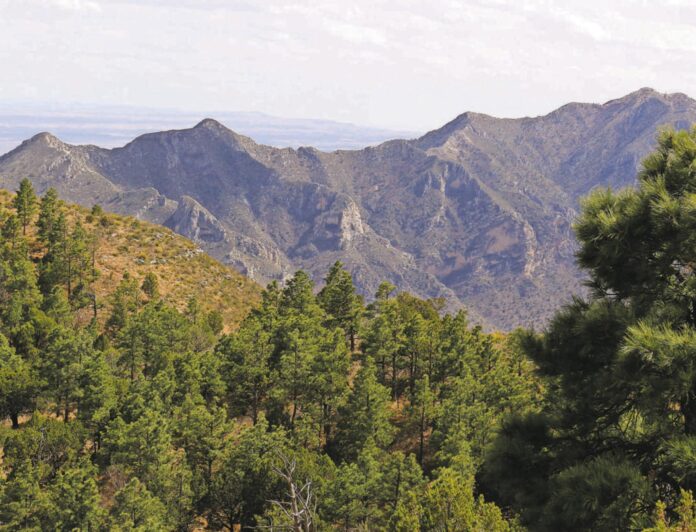
The Trump administration is moving closer to repealing a long-standing rule limiting road construction and logging on federal land, including New Mexico’s national forests.
The so-called “Roadless Rule,” adopted in 2001 by the U.S. Department of Agriculture, affects about 45 million acres of federal public land in the U.S., including 1.6 million acres in New Mexico. Part of the acreage lies within Lincoln National Forest, which spans from the Ruidoso area in south-central New Mexico to the southeast just outside Carlsbad.
On Aug. 18, U.S. Secretary of Agriculture Brooke Rollins filed a proposal in the Federal Register to rescind the Roadless Rule, initiating a public comment period until Sept. 21 when the Department of Agriculture will receive feedback before making its final decision.
The move drew immediate backlash from environmental groups in New Mexico and its Democratic members of Congress.
U.S. Sen. Martin Heinrich (D-NM) said the Roadless Rule protected undeveloped areas in national forests that are used for outdoor recreation, such as hunting and fishing.
“These roadless areas are irreplaceable, and the Roadless Rule is what protects them,” Heinrich said. “Americans have been clear – repeatedly and across party lines – that we don’t want President (Donald) Trump screwing with our public lands.”
In Lincoln National Forest, about 158,000 acres are covered by the rule, spread throughout the Capitan Mountains Wilderness on the northern edge of the forest, along its western edge near Alamogordo and on the southern tip of Lincoln National Forest near Carlsbad Caverns National Park.
The Roadless Rule allows for bans on logging and construction of roads on designated “inventoried roadless areas” on these lands, also known as IRAs. The U.S. Forest Service, a subagency within the Department of Agriculture, can adjust the prohibitions as needed, meaning some IRAs allow road construction but not logging and vice-versa.
All of Lincoln’s IRAs are currently exempted from the ban on road construction, leaving a prohibition on logging in those areas unless later amended.
In total, New Mexico holds about 1.6 million acres designated under the rule, out of about 9.3 million U.S. Forest Service lands throughout the state.
The roadless areas are divided among six units managed by the Forest Service: Lincoln, Carson, Cibola, Coronado, Gila and Santa Fe national forests.
Road construction is banned on about 1.1 million acres of these lands while allowed on about 430,000 acres monitored under the rule.
Rollins’ proposal would rescind the rule in its entirety, opening the lands in Lincoln National Forest along with others in New Mexico and across the U.S. to development.
The secretary said the rule’s demise would give public land officials more freedom to manage national forests based on their individual needs rather than by a “one-size-fits-all” regulation.
Rollins said restrictions imposed by the Roadless Rule could lead to overgrown landscapes, which she said could cause wildfires.
“Our forests can’t afford another decade of inaction. Across the country, we’ve watched preventable conditions – overgrown stands, insect outbreaks and disease – turn healthy landscapes into tinderboxes,” Rollins said in a statement. “For too long, outdated restrictions have kept tens of millions of forested acres off-limits to the very treatments that improve forest health and reduce wildfire risk to our communities.”
U.S. Forest Service Chief Tom Shultz said 40% of the roadless areas have “high or very high” potential for wildfires, and only 5% of those areas have received “hazardous fuel reduction treatment” since 2014.
“Acting now, thoughtfully and decisively, is the best way to restore the balance, reduce wildfire risk, and secure the long-term health of our forests and neighboring communities,” Shultz said.
The proposal comes about two months after Sen. Mike Lee (R-Utah) proposed legislation to amend a wildfire-prevention bill being considered in Congress to codify repeal of the Roadless Rule into federal law. That would mean the rule could not by revived by Congress, should Rollins’ effort prove successful.
Lee’s bill was passed in June by the Senate’s Energy and Natural Resources Committee, which Lee chairs, on an 11-9 vote along party lines and is awaiting further action by the full Senate. Heinrich, the committee’s ranking Democrat, voted against the measure and called the legislation a “Trojan horse” as it was attached to a bill that previously enjoyed bipartisan support.
When Rollins originally announced her intention to rescind the Roadless Rule last fall, Heinrich and the rest of New Mexico’s all-Democrat congressional delegation penned a letter to the secretary demanding that their state be excluded from the repeal.
No such provision was added to the proposal when it was published in the Federal Register.
The lawmakers highlighted New Mexico’s elevated wildfire risk, and contended wildfires are less likely in roadless areas.
“The creation of new roads in unroaded areas also would pose a significant risk to public safety in our state,” read the letter. “The administration’s goal of faster deployment of suppression resources must be compared against the reality that more fires will ignite when roads are added.”
The proposal was also opposed by statewide environmental groups. Bjorn Fredrickson with Albuquerque-based New Mexico Wild said allowing roads to go into formerly undisturbed forest areas would open them to future industrial development.
“Once you build a road into a roadless area, you’ve opened it up to industrial extraction, and the wild character of that land is gone for generations, if not forever,” he said. “New Mexicans have fought to keep these forests roadless because our drinking water, our wildlife, and our way of life depend on it.”
Managing Editor Adrian Hedden can be reached at 575-628-5516, or @AdrianHedden on the social media platform X.