
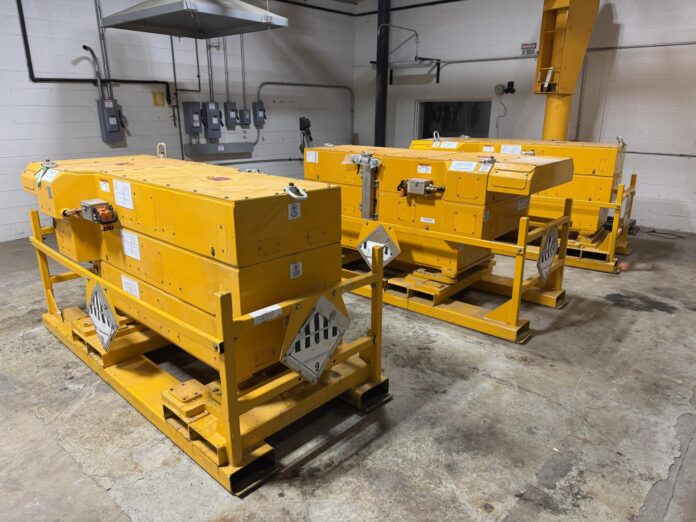
Battery fires are being researched using three large-scale lithium batteries at a nuclear waste repository near Carlsbad.
The U.S. Department of Energy’s Carlsbad Field Office along and Salado Isolation Mining Contractors, the contractor hired to run operations at the Waste Isolation Pilot Plant agreed to host the research through an agreement rhe National Institute of Occupational Safety and Health’s Pittsburgh Mine Research Division.
At WIPP, the Energy Department disposes of transuranic nuclear waste (TRU), which is clothing materials, equipment and other debris irradiated during nuclear activities.
The waste is buried at WIPP in a salt deposit about 2,000 feet underground. The salt gradually collapses on the waste, burying the refuse and blocking radiation from escaping.
The research agreement will enable the transfer of three large platform Lithium-Ion batteries to WIPP where their fire risks will be studied at a large scale, read a news release from the Department of Energy.
Previous research has been limited to testing medium-sized battery packs where the results were then used to estimate the performance and fire risk of larger batteries, the release read.
“While that research provided valuable information, the true nature of large-scale battery fires remains difficult to predict and understand,” read a statement from the energy department.
It will also inform battery usage and safety measures at other underground federal facilities, the release read, including other mines and repositories across the U.S.
Many of those sites use heavy duty electric batteries for vehicles and other equipment.
“The findings could also support the development of targeted emergency evacuation, response protocols and occupational safety and health related to underground spaces,” read the release.