
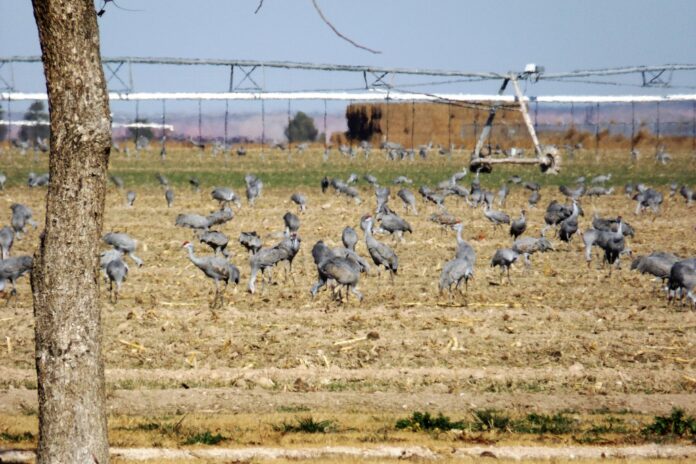
Dr. Jim Montgomery studied and documented the migratory patterns of the thousands of lesser sandhill cranes for 40 years.
That includes when they briefly call Bitter Lake National Wildlife Refuge in Roswell home each year.
After studying wildlife conservation as an undergraduate at Oklahoma State University, Montgomery, who grew up in Arkansas, earned graduate degrees at the University of Arkansas and Texas Tech University, completing a doctorate in zoology. After two and a half years of active duty in the U.S. and in the Army Reserve, he taught biology at the New Mexico Military Institute from 1981 to 2005.
That background made the professor who now lives in Santa Fe a perfect “keeper of the cranes.” At the request of Bitter Lake management, Montgomery began monitoring cranes in the winter of 1988 after beginning to volunteer at the park in 1985.
His work continued through spring 2025, earning the National Wildlife Refuge Volunteer of the Year recognition in 2003 and a special achievement award from the North American Crane Working Group in 2023.
Montgomery continued sharing his knowledge of the unique environment that welcomes the birds each year as part of the Bitter Lake Cranes and Cocoa on Nov. 14. at the refuge’s Visitor Center. What made Montgomery want to devote so much of his time on tracking these animals?
“I like cranes,” Montgomer says. “They’re large, noisy, and interesting birds. I got into this when the manager at Butter Lake, Lee Marlette, asked if I would check on the cranes roosting off of the refuge and I stayed with it.”
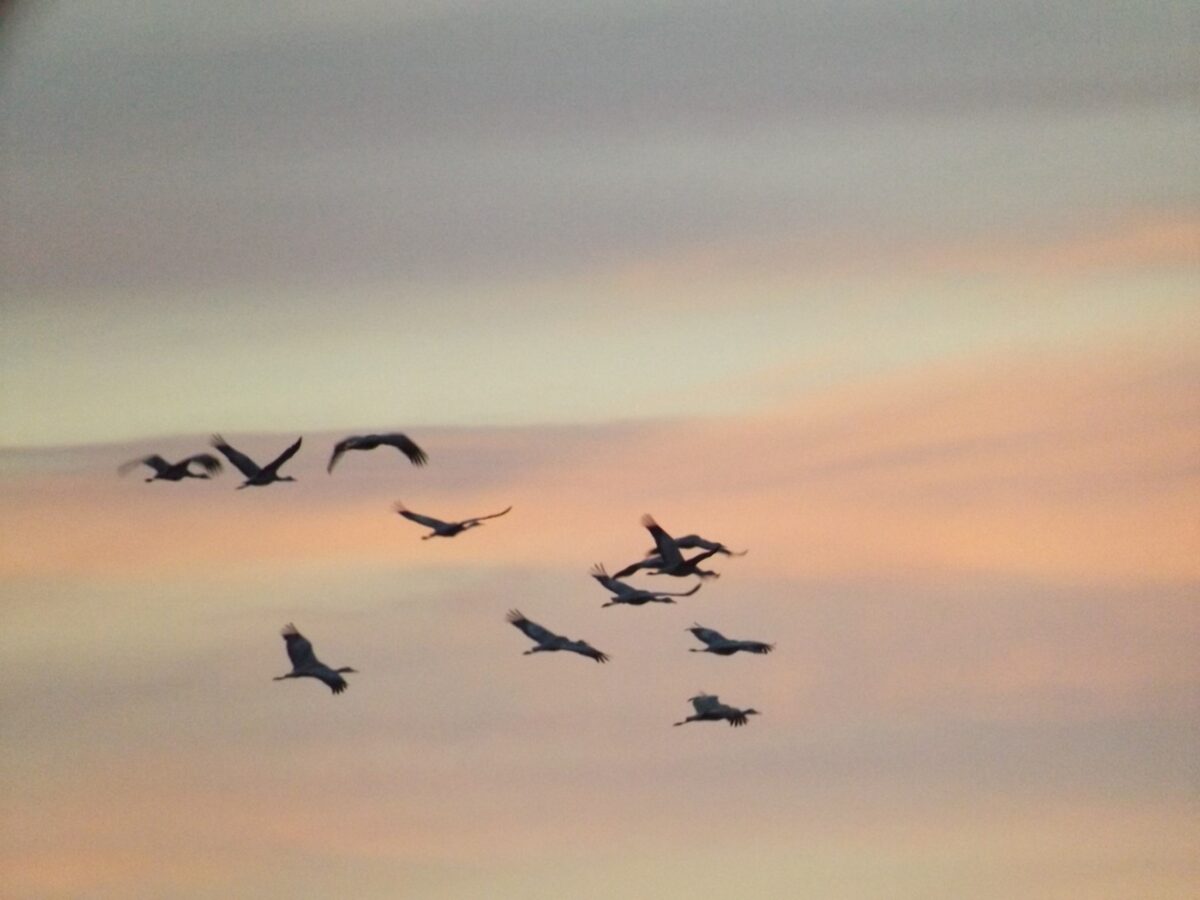
Provided by Friends of Bitter Lake
Distinctive Majestic Birds
Bitter Lake boasts more than 24,000 acres of wetland and wilderness area about 20 minutes to the northeast of Roswell. The area is located between the northern edge of the Chihuahuan Desert and the southwestern corner of the Great Plains.
The majestic gray birds weigh an average of about 9-10 pounds with wingspans reaching more than 7 feet. The distinct red foreheads stand out, complemented by white cheeks and long, pointed beaks. The cranes are known for long trumpeting calls.
The Roswell flock is part of a population that summers in western Alaska and eastern Siberia. Fall migration runs from mid-to-late October through December, with a high around the first week of November as their number climb up to 30,000.
“Fall migration numbers will peak in about the first or so week of November,” Montgomery said. “Then the numbers will remain relatively high through December, and then there’s a noticeable decline in numbers throughout the rest of the winter.”
Perfect Habitat
Staying in Roswell is part of a longer journey across the continent. Later in the winter, the cranes move on to Mexico or the area near Wilcox, Arizona. Some of those who stay longer may also head to Texas. The Roswell area apparently offers plenty of what the fowl crave.
“What the cranes need is a roosting area and a food supply,” Montgomery said.
Roswell Bitter Lake and Bottomless Lake State Park areas feature both of those. Shallow ponds are perfect for roosting areas and water, while irrigated cropland provides a food source. Rains in the region can provide even more roosting opportunities for the migratory birds.
The Cranes and Cocoa event is put on once a year. Montgomery, 81, offers those in attendance a complete overview of how the cranes migrate and their presence at Bitter Lake. Guests are then offered a chance to view the cranes in their native habitat.
In addition to the sandhill cranes, Bitter Lake regularly hosts as many as 50,000 snow geese and ducks during fall migration. Other birds that can be seen in the area include a wide variety of wading birds and shorebirds like great blue herons, white faced ibis, snowy plovers, least terns, black-necked stilts, and avocets.
Wildlife can be seen year-round, but some of the best times to visit are September through May. More than five miles of trails await hikers seeking to reconnect with nature, with the cranes becoming one of the marquee attractions each autumn.