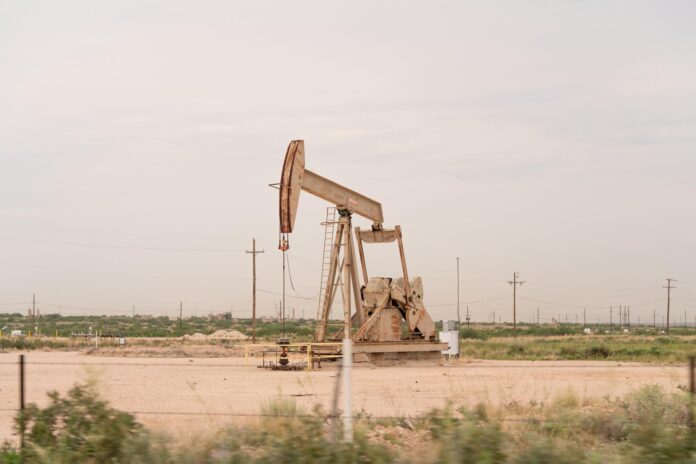
Almost all the public land managed by the federal government near Carlsbad could be opened to oil and gas drilling.
That’s because of a resource management plan, known as an “RMP,” proposed by the U.S. Bureau of Land Management (BLM) in September.
The proposal involved adjustments to the allowed land uses on the about 2.1 million surface acres and 2.7 million subsurface mineral estate managed by the bureau’s Carlsbad Field Office.
The last amendment to the current plan was in 2008, 20 years after it was first published in 1988.
The recent proposal would create an entirely new RMP. A draft of the new RMP was published in 2018, and public comments were received to help write the latest version.
If approved, the Bureau of Land Management said, the new plan would stay in effect for up to 30 years.
The field office oversees publicly owned federal lands throughout Eddy and Lea counties, mostly within the Permian Basin. Chief among the BLM’s functions is holding quarterly lease sales where oil and gas companies bid on industry-nominated parcels to acquire access for drilling and other oil- and gas-related operations.
The bureau also manages outdoor recreation sites, grazing leases and other uses on the federal land.
‘Slight’ increase in land for drilling; cut to constraints
Under the current RMP, almost the same amount of land is available for energy leasing as under the proposal, but the new plan would reduce restrictions on certain parcels.
The cut restrictions include the “no surface occupancy” designation, which means the mineral estate can be accessed underground but the land itself cannot be disturbed, and “controlled surface use,” which allows some surface development under tighter restrictions.
The plan as proposed would “open” 97% of the land to mineral production, read the proposal, an increase of just 0.3% or 6,900 acres.
Meanwhile, the plan also proposed a 5.6% increase in lands that could be developed by oil and gas companies under “standard terms and conditions,” read a statement from the Bureau of Land Management, without the “no surface occupancy,” “controlled surface use” or other restrictions. Other uses could occur on the lands, but they will remain available to oil and gas as well.
“This slight increase in available minerals is mainly due to technology used to drill horizontally, resulting in less surface disturbance,” read the statement from a BLM spokesperson.
The remaining 3% would be set aside from development for endangered species recovery and wildlife study areas near the Guadalupe Mountains in the southwestern portion of the Carlsbad management area.
A public comment period was offered Sept. 11 to Oct. 13 with members of the public invited to voice concerns or give feedback. A final decision will follow the comment period later this year.
The proposal was touted by the Bureau of Land Management and its parent agency, the U.S. Department of the Interior, as an “expansion of energy opportunities” in the Carlsbad area, according to a Sept. 4 news release.
The release pointed to a $4 billion oil and gas lease sale held in May, the agency’s largest sale ever, primarily focused in Eddy and Lea counties.
“These public lands possess unique geology containing extensive oil and natural gas reserves, which is part of the larger Permian Basin,” read a statement from the agency.
Industry ‘certainty’ or ‘pollution crisis?’
The plan’s apparent focus on reducing regulations on oil and gas production drew concerns from environmental groups in New Mexico.
A report by Santa Fe-based WildEarth Guardians contended the new plan would lead to 12,096 more oil and gas wells drilled on public land in the next 20 years.
Those wells would use 236.5 billion gallons of water for drilling, the report read, calculating the total by using the average water usage for a well completion.
The wells would generate up to 2.4 billion metric tons of greenhouse gas pollution, read the report.
“Oil and gas drilling in the Greater Carlsbad area has overwhelmed New Mexico’s land, water, and communities with a pollution crisis, yet (President Donald) Trump’s BLM is proposing to make it much worse,” said Rebecca Sobel with WildEarth Guardians.
She pointed to a purported increase in oil- and gas-related spills in southeast New Mexico as extraction operations expanded.
About 1.9 million gallons of produced water, a byproduct fluid created during oil and gas drilling, were spilled in New Mexico so far in 2026 – about half spilled on federal or Tribal lands, read a Sept. 11 study from WildEarth Guardians.
Produced water is high in brine and other chemicals. It’s mostly drawn to the surface from the same shale formations oil and gas is extracted from, at a ratio of up 10 barrels per each barrel of oil.
“Companies are spilling oilfield waste every day, ozone pollution is already exceeding federal health standards, and New Mexico is preparing for a future with less water,” Sobel said. “There is no climate math that makes perpetual oil and gas expansion add up.”
But the BLM argued the lands were critical to energy production in the U.S. and that the change in the RMP was in line with an executive order signed by Trump in January 2025. The order, titled “Unleashing American Energy Dominance,” called on federal agencies to curb regulations that could limit production of energy sources such as oil and gas.
About 19% of U.S. energy production occurs on lands managed by the Department of Interior, generating an average of $10 billion a year in federal revenue, according to an environmental impact statement on the Carlsbad plan published by the BLM.
The approximately 480-page document outlines the purposes and details of the proposed plan.
“Energy development on public lands increases domestic energy production, provides alternatives to overseas energy resources, creates jobs, and enhances the nation’s energy security,” read the statement.
The oil and gas industry is on record in support of the proposal.
The federal plan must provide “regulatory certainty” to the oil and gas industry by reducing government restrictions and allowing the industry itself to reduce the environmental impacts of extraction, read public comments submitted by the Independent Petroleum Association of New Mexico for the plan’s original draft in August 2018.
The trade group represents 350 oil and gas companies described as “independent,” meaning they focus primarily on exploration and production of oil and gas rather than multiple sectors of the supply chain.
“While New Mexico continues to make strides in diversifying the state economy, the fact of the matter is that oil and gas production is the backbone and lifeline of the state,” wrote the association’s president, Jim Winchester. “A final BLM Carlsbad RMP must allow oil and gas producers a pathway without significant, ambiguous restrictions, especially given the overwhelming work the industry is already doing to minimize environmental impacts and finance conservation efforts.”
Managing Editor Adrian Hedden can be reached at 575-628-5516, or @AdrianHedden on the social media platform X.