
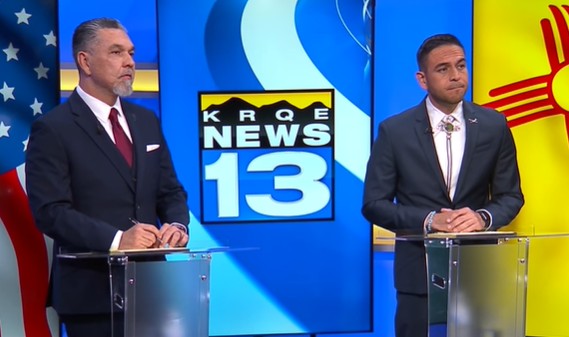
U.S. Rep. Gabe Vasquez, D-N.M., and Republican Greg Cunningham sparred over affordability, crime, immigration and health care Friday, Oct. 16 in a televised debate.
KRQE News 13 hosted the hourlong debate in its Albuquerque studio 10 days after early voting began Oct. 6 for the Nov. 3 election.
Vasquez, a two-term incumbent, and Cunningham, a Marine combat veteran and retired Albuquerque police detective, are running to represent the 2nd Congressional District, which covers much of southern New Mexico and part of western Albuquerque.
Vasquez sought to tie Cunningham to Trump, who endorsed the GOP nominee in a video posted Oct. 4 to Truth Social.
“It’s unfortunate that my opponent said his number one priority is making sure is going to be supporting the president’s agenda,” Vasquez said, referencing a January interview Cunningham did on Conservative News Talk.
Cunningham portrayed Vasquez as an ineffective legislator who says one thing on the campaign trail but votes differently in Washington.
“That’s been one of your trademarks, Mr. Vasquez,” he said.
Cunningham cited a bill that expanded the Radiation Exposure Compensation Act, or RECA, to include compensation for New Mexicans impacted by nuclear testing at the Trinity Site near Socorro, primarily during the U.S.’ first nuclear detonation in 1945 in the culmination of the Manhattan Project. Vasquez co-sponsored an extension but voted against Trump’s signature tax bill known by supporters as the “One Big Beautiful Bill Act.” The bill was signed into law on July 4, 2025 and included a RECA expansion among myriad other spending initiatives.
Vasquez said he opposed the bill because of changes to Medicaid and food assistance eligibility unrelated to RECA but also contained in the language.
Crime and public safety
Vasquez cited $4 million he secured for New Mexico law enforcement and said investments should continue, along with funding for behavioral health and efforts to combat substance abuse. He said increased resources were needed to address widespread crime.
Cunningham said his 20 years as a detective taught him what law enforcement needs. He said he would give officers “not just the equipment, but the support from their representatives.”
When it comes to keeping guns away from convicted felons and teenagers, Cunningham said punishing offenders is key. Vasquez said he supports penalizing gun owners who do not properly secure their weapons and holding social media companies accountable for stolen firearm sales on their platforms.
Affordability
Cunningham said he wants to cut taxes, citing the One Big Beautiful Bill Act’s temporary deductions for overtime pay and tipped wages.
“That’s a very good example of putting money in people’s pockets,” he said.
Vasquez blamed Trump administration economic policies for rising household costs, calling them “disastrous” and “devastating” for New Mexico families. He said tariffs and Medicaid cuts need to be rolled back if Democrats regain control of Congress.
Vasquez also attributed rising fuel prices to the U.S. war with Iran and said it shows the need to end the eight-month conflict. Critics of the war blame higher fuel prices on Iran’s closure of the Strait of Hormuz, a key oil and gas shipping route, after U.S. airstrikes in February.
When asked if he supports the war, Cunningham said he wants the troops “home as soon as possible,” but added that he does not want Iran to have a nuclear weapon, which is the Trump administration’s rationale for the war.
Medicaid and SNAP changes
Tighter eligibility requirements for Medicaid take effect in January under the One Big Beautiful Bill Act. At least 88,530 New Mexicans could lose coverage under the new work requirements and restrictions on noncitizen enrollment, according to the New Mexico Health Care Authority.
The Supplemental Nutrition Assistance Program (SNAP), commonly known as food stamps, is also changing. Trump’s bill included language for stricter work requirements and required states to pick up a larger state share of program costs. New Mexico has the nation’s highest percentage of residents receiving SNAP benefits, 21.9%, according to the U.S. Department of Agriculture.
Vasquez said he supports rooting out waste and fraud but opposes the work requirements, citing the impact on SNAP households with children.
“When you take that away from kids that have absolutely nothing to do with the working condition or the requirements placed upon their parents, that is nothing but cruel policy,” Vasquez said.
He also opposes the Medicaid requirements, noting that hospitals, especially in rural areas, depend on those dollars to keep their doors open.
Cunningham said he does not want anyone to lose coverage who should have it but that the requirements are needed to keep both programs solvent.
Immigration
Both candidates agreed on streamlining paths to citizenship or legal work but differed on how.
Vasquez said he has introduced the New American Immigration Plan, which boosts investment in ports of entry and border security while creating pathways to legal status.
Cunningham said the borders must be secure and immigration laws enforced first.
“Until our streets and until our neighborhoods are safe, none of these things can be implemented,” he said.
The candidates also differed on whether the administration’s removals of people in the country without legal status and ICE’s tactics are justified. Cunningham said there may be individual cases of wrongdoing but that he sees no systemic pattern, citing his experience working with federal agencies. Vasquez, the son of Mexican immigrants, said many ICE agents are poorly trained and accused the Trump administration of indiscriminately targeting people for removal.
“I don’t think American citizens like my mom, who speak in broken English, should be stopped and potentially thrown into a detention center just because she doesn’t have her ID,” Vasquez said.